TMI Soft

TMI Blog

TMI Soft Blog

For businesses looking for support and solutions to adopt AI: choosing the right problem, putting AI into real operations and building the software that goes with it.

AI Adoption ·

Running on SaaS for years: how will AI agents change your workflows?

With AI agents, businesses running on SaaS do not need to drop those applications, but they do need to redesign their workflows. The reason: today’s processes are built around the screens of each application, with people as the glue (exporting to Excel, copying data, messaging each other). AI agents can do exactly that connecting work. SaaS will step back to hold data and rules, AI will do the operating, and people will keep approval and decisions. Per-user licensing is changing along with it.
AI Adoption ·

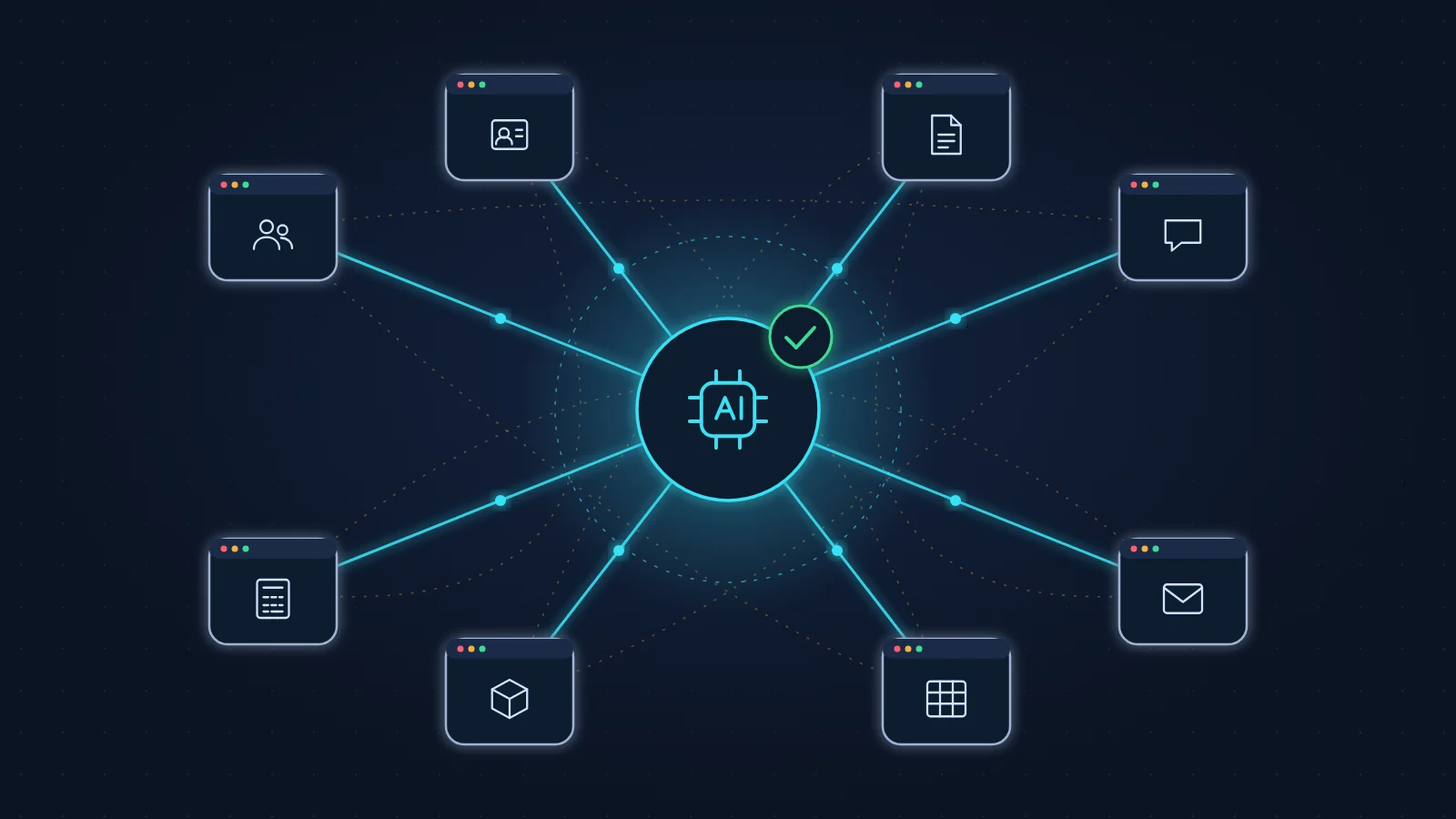
What Can Companies Learn from Palantir’s Maven System About Data Consolidation and Faster Decisions with AI?

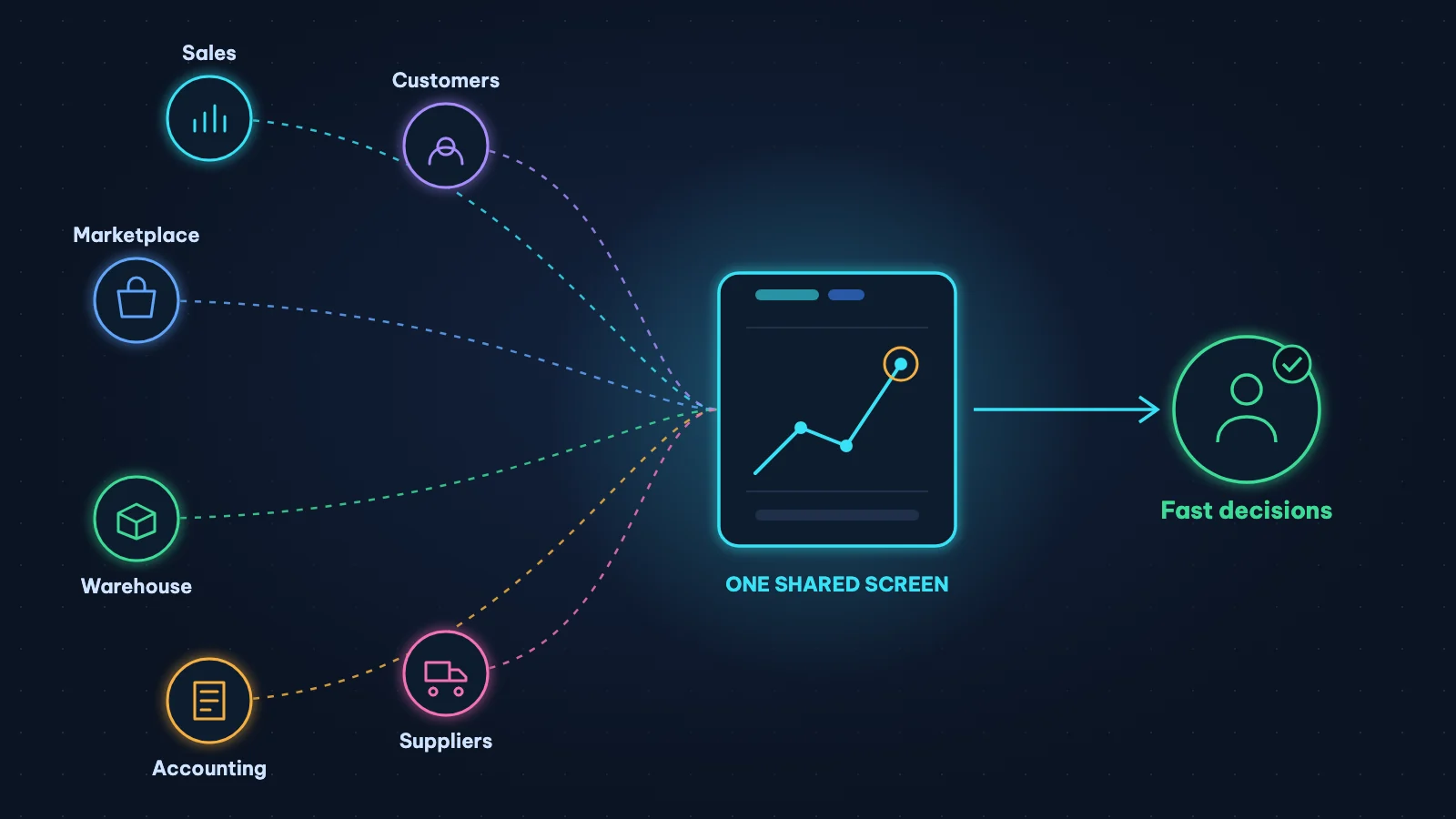
The biggest lesson from Palantir’s Maven system is not in the AI model, but in gathering data from many scattered sources into one place so decision-makers see the same picture. According to the Pentagon, Maven replaced 8–9 separate systems with a single screen, so decisions are made faster with fewer people. Companies can apply the same principle: consolidate data first, let AI recommend, and keep people in the approval loop for high-risk decisions. The faster things move, the more data quality and the review step matter.

AI Adoption ·

Beyond the AI Itself: What Software Does a Company Need to Make AI Really Work?

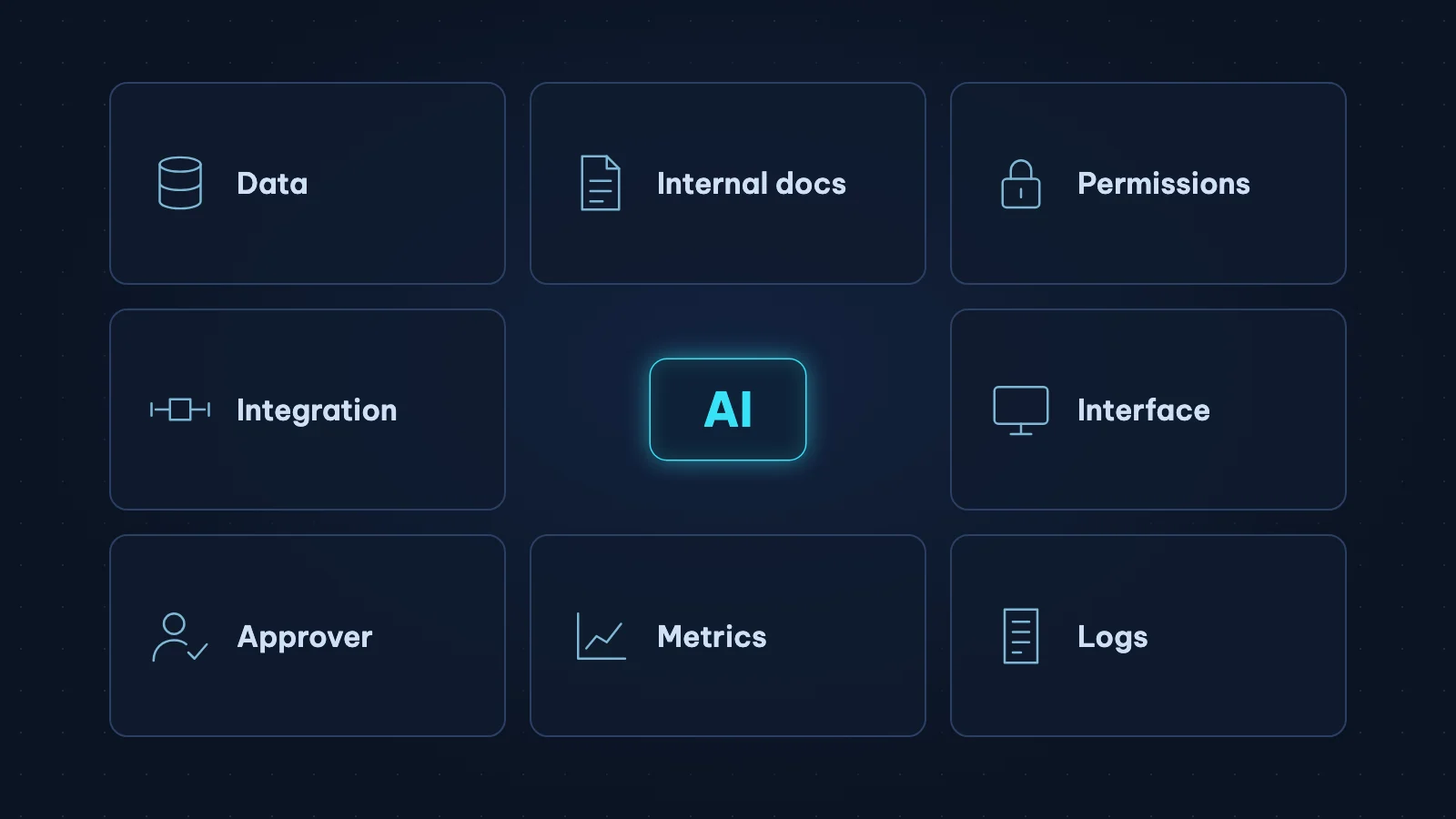
To make AI work in daily operations, a company needs more than an AI account. It needs the software around it: connections to the data and systems in use, a place to store internal documents for AI to search, permissions for who may see what, an interface right inside employees’ work, human approval steps, and logs to measure results and cost. The AI model can be rented, but the surrounding software usually has to be built specifically for each company, and that is what decides whether AI is really used.

AI Adoption ·

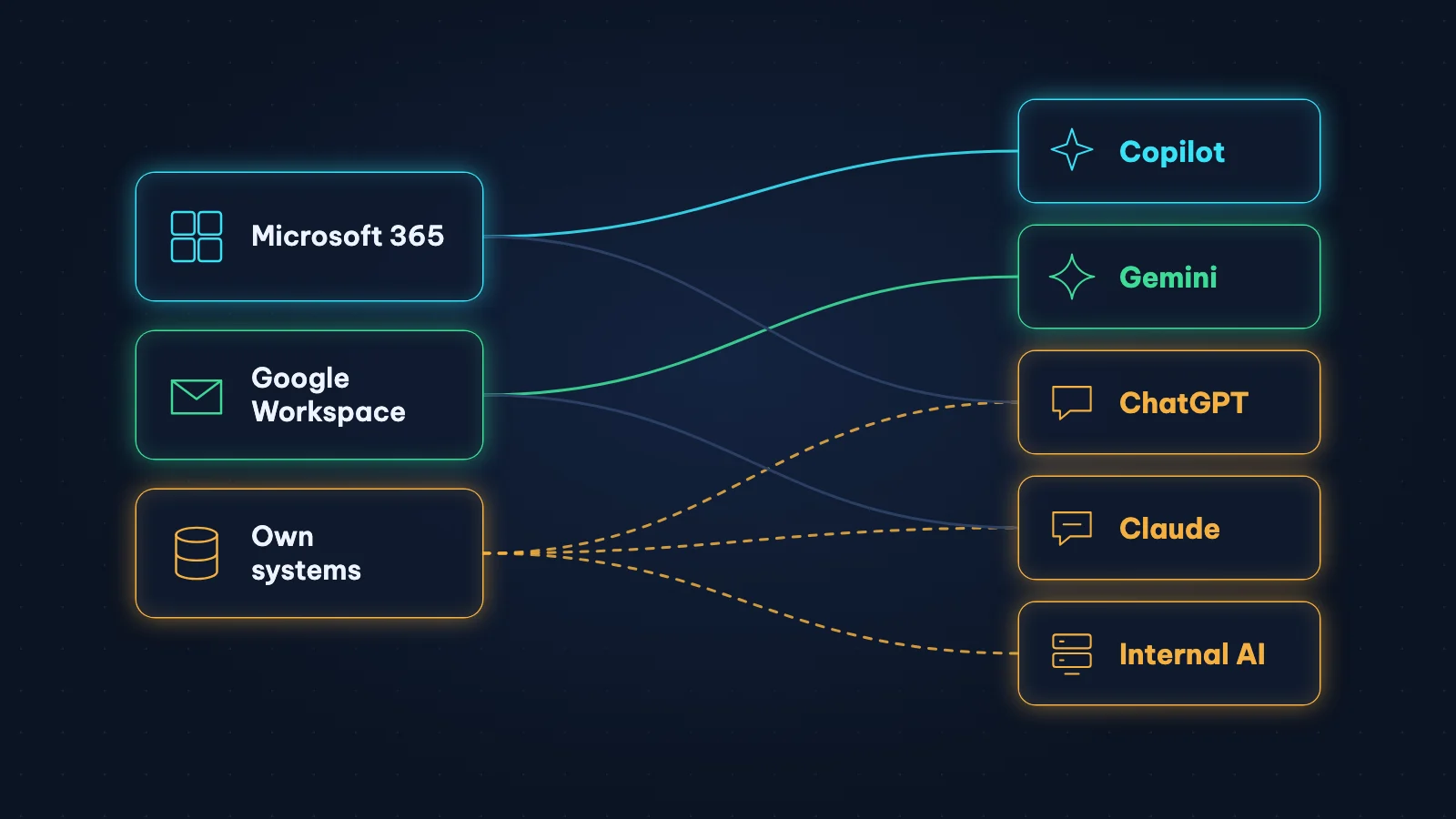
Should a Company Choose ChatGPT, Copilot, Claude, Gemini or Internal AI?

Do not choose by model rankings; choose by where your data sits. A company on Microsoft 365 should start with Copilot; on Google Workspace, use the Gemini already included; with no ecosystem, pick one shared assistant, the business edition of ChatGPT or Claude. Specialist teams add specialist tools later. Internal AI is worth considering only when data absolutely must not leave the company or the task volume is very large.

AI Adoption ·

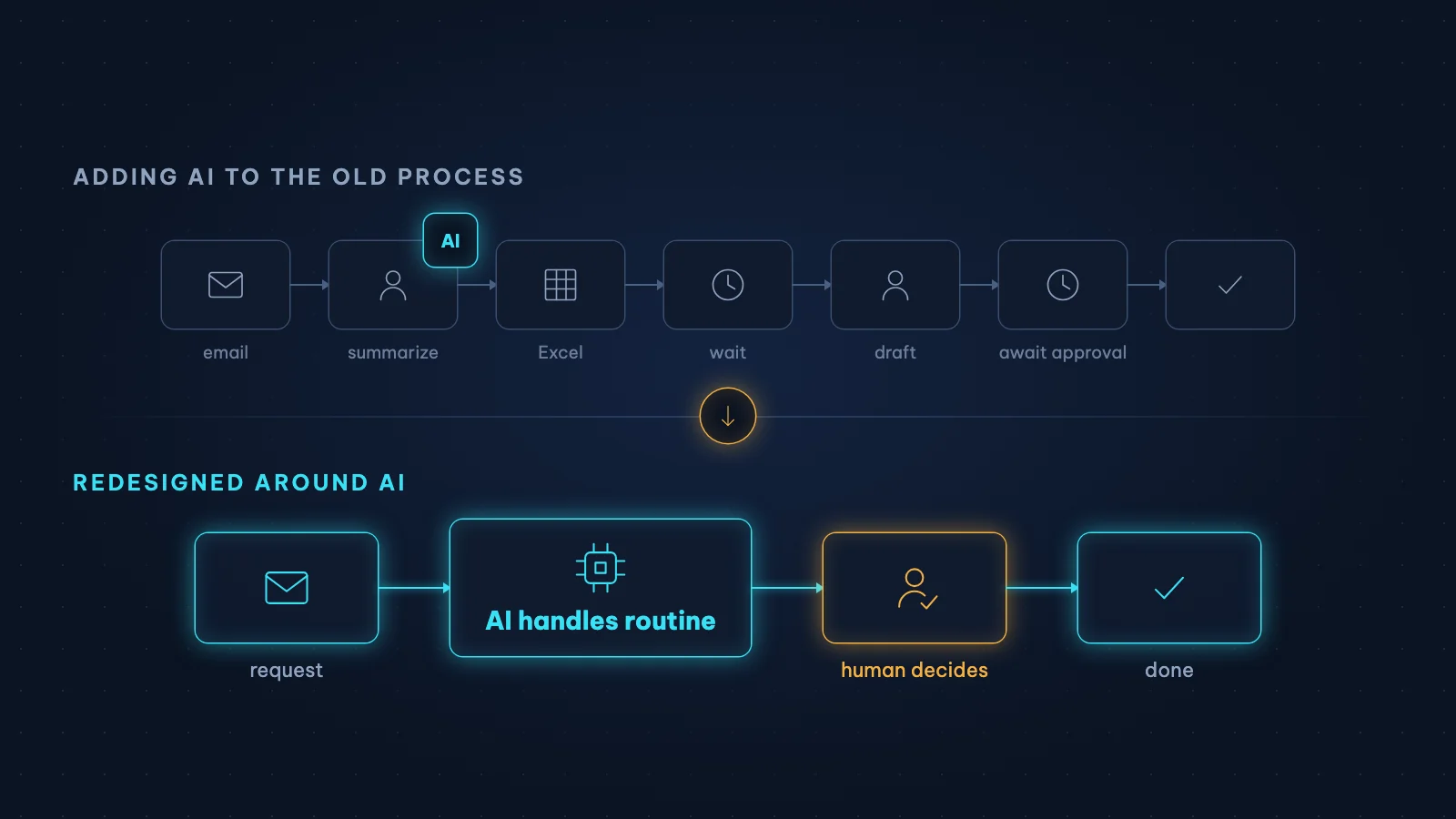
Applying AI: Why Even Processes That Have Run for Years Need to Be Redesigned

Most companies already use AI but do not yet see clear results in their business reports. The reason is usually not the tools, but that AI is attached to a process designed for human limits: handoffs by email, multi-layer approvals, weekly reports. When AI removes those limits, many steps no longer have a reason to exist. The companies that capture large value from AI are the ones willing to redraw the whole workflow, not just speed up each old step.

AI Adoption ·

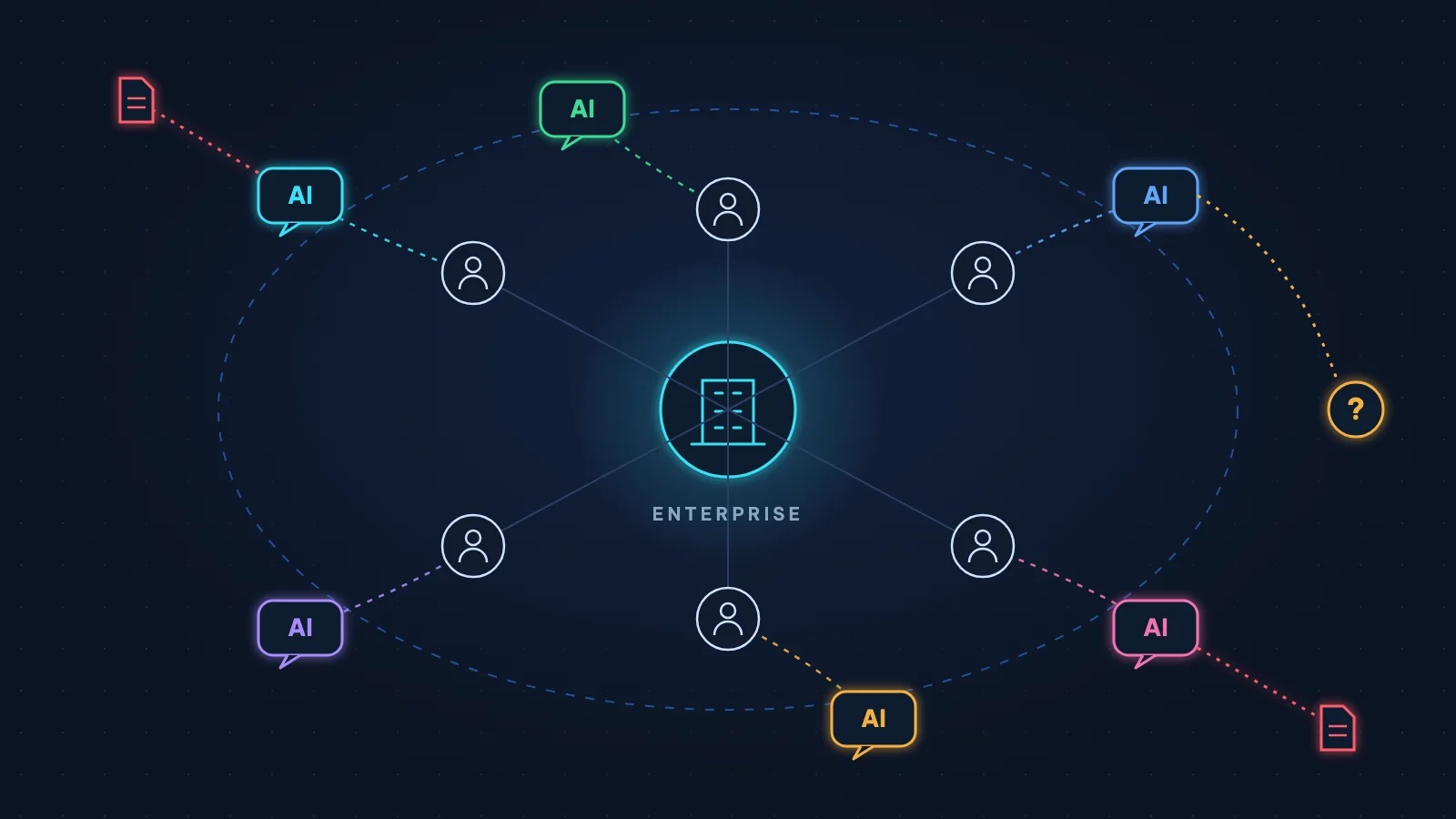
Rolling Out AI in the Enterprise: 5 Leadership Concerns and Where to Start Addressing Them

When asked to “look into and roll out AI”, most companies do not start from zero: employees have been using AI on their own for a long time. So the common concern is not “should we use AI”, but this: everyone uses it differently and so it is ineffective, data leaves the company without control, and AI output is submitted or sent to customers without anyone checking it. At the same time, the company still wants to use AI to cut errors and costs and not be left behind by competitors. A sensible approach follows an order: understand the current state, set common rules and tools, then pick a few repetitive tasks to standardize and measure.

AI Adoption ·

Which AI Level Is Your Company At? Gartner’s 5-Level AI Maturity Model

Gartner’s AI maturity model divides the AI adoption journey into 5 levels: Awareness, Active, Operational, Systemic and Transformational. MIT research across 721 companies shows that the difference in financial performance appears when AI moves from experimentation into real operations. The simplest way to self-assess is to start from two questions: what decisions is the company making, and what data does it have.

AI FDE ·

When AI Can Write Code, Where Does the Engineer’s Value Shift?

As AI makes writing code faster and cheaper, the engineer’s value shifts from “being able to build” to “being able to build something valuable”. AI handles well what has been put into words and data; what a company truly needs is often unspoken. Asking questions, listening without judgment, accompanying users and taking responsibility for results remain human work, and that is the role of the FDE (Forward Deployed Engineer).

AI FDE ·

Outsourced Dev, BrSE, IT Consulting or FDE? A Comparison to Pick the Right Partner for Applying AI

Each role holds one part of a project and starts from a different point: outsourced development starts from a finalized spec, BrSE from finalized requirements, IT consulting from organizing the problem, and IT sales from the product to sell. The FDE (Forward Deployed Engineer) holds all four stages: requirements discovery, analysis & proposal, development, and deployment & operation, and starts from the company’s purpose and business goals. If the problem is still vague and nobody internally holds the whole chain, the FDE is the lowest-risk choice.

AI FDE ·

What Is an FDE (Forward Deployed Engineer)? Role and Responsibilities of the Engineer Deployed on Site

An FDE (Forward Deployed Engineer) is an engineer “deployed” right next to the customer’s team: they directly study the business problem, design the solution, write code, integrate with existing systems, and stay until the solution runs in real operations. The model was pioneered by Palantir and is now widely adopted by AI companies such as OpenAI, because the biggest gap in AI today is not the model but getting the model into daily workflows.

AI Adoption ·

Where Should a Business Start with AI? A 4-Step Roadmap from Problem to Real Operations

A business should start applying AI from a specific business problem with data and clear KPIs, not from a tool. An effective roadmap has 4 steps: diagnose to pick the 1–2 most valuable problems, validate on real data in a small scope, improve continuously with users, then move into formal operation and hand over so the internal team can run it themselves.

Start with a conversation

Share your business challenge. TMI will get back to you to suggest a suitable starting point.